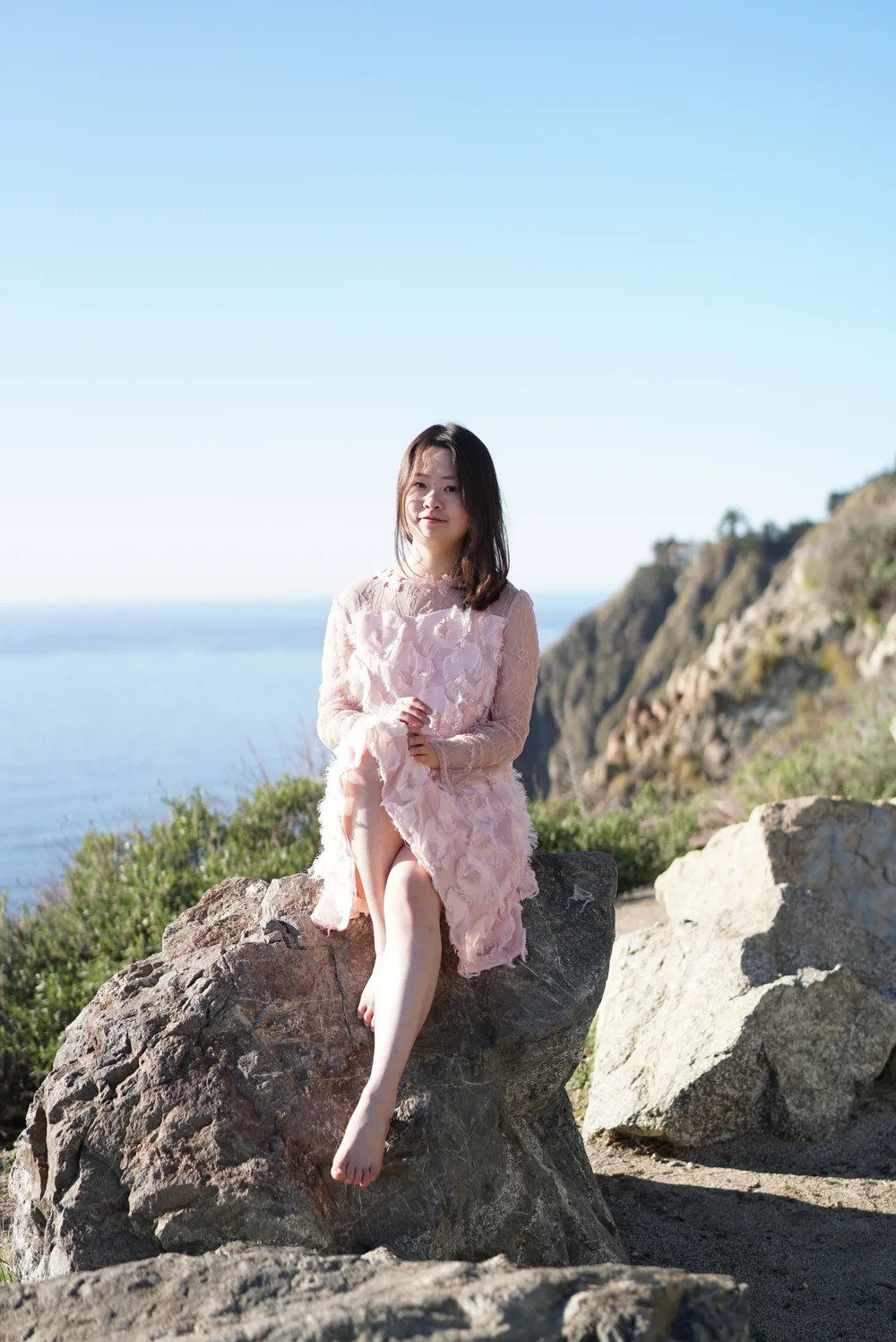
Roboticist
I am a roboticist at Google DeepMind Robotics, where I moved in November 2026. Before that I was a software engineer on the Semantic Perception team at Google XR, making an AI conversational agent on Google Glass read text as well as a human eye can, so that low-vision users can access it. That work was featured in the Astra Aira Visual Interpreter demo at Google I/O 2025.
A seven-year-old opens drawers, catches a flying toy, and plays the piano, and learned all of it from a single body over a single childhood. Robot policies trained on over a million trajectories still fail at tasks this simple. I don't think scale alone closes that gap. The nervous system solved manipulation under constraints no engineer would tolerate, and its design decisions look strikingly unlike the ones robot learning is converging on. The survey I am writing with Davy Deng is my attempt to walk the sensorimotor stack, from action to touch, vision, world model, and lifelong learning, and ask at each level which of the brain's decisions are worth stealing.
The survey, written with Davy Deng, is in preparation. Email me if you would like an early draft.
Neuroscientist
I did my PhD at the MIT Media Lab, advised by Ed Boyden and Joseph Jacobson. I built tools for mapping biomolecules in the brain: the transcriptome, which is where all the RNA lives, and the connectome, which is how the neurons are wired, across whole zebrafish and C. elegans brains. My thesis produced and analyzed 30 TB of in situ RNA sequencing imaging data to map gene expression across an entire vertebrate brain. It is a sobering field. The brain is very complex, and I made a small dent.
Before graduate school I was a visiting student in Kay Tye's lab at MIT, studying the neural mechanism of social dominance. Using optogenetics, we found that a prefrontal–hypothalamic circuit controls who wins a social competition, published in Nature. Along the way I started a multi-animal tracking project with Cewu Lu and Nancy Padilla that grew into AlphaTracker, which applies human pose estimation to mice and clusters their social behavior without labels. The full list of papers is on the CV page.
Film enthusiast
Neuroscience taught me how much a well-designed visual and audio stimulus can move a mind, at least a mouse's. Film is the same experiment with humans as the audience. I directed my first short film the summer after high school, and every couple of years since I have made another to work through a question I was wrestling with, from how technology reshapes human connection to whether a robot can embody romance.
At MIT I founded the MIT Film Makers Association and started the MIT AI Film Hack, a competition where people make three-minute films with AI tools. It has run three editions since 2023, with hundreds of participants and sponsorship from the major generative-video startups, and I co-organize the Generative AI for Visual Arts workshop at CVPR. Watching the entries improve each year taught me that the tools keep getting better and the content still decides everything.
The Film page has the films, the hackathon playlists, and the thinking behind them.